报告地点:信息楼310学术报告厅
(一)
报告时间:2026年11月12日9点
报 告 人:Juan Jose Rodriguez-Andina
西班牙维戈大学,教授
报告题目:Fundamentals of Artificial Intelligence for Power Electronics
内容简介:Artificial intelligence (AI) and power electronics (PE) are becoming increasingly intertwined. The rapid expansion of AI workloads drives unprecedented demand for efficient power conversion, while AI itself is expected to empower PE as a multiplier, elevating the field to the next level of intelligence. This lecture presents the fundamentals of AI for PE. It discusses the essential concepts, methodologies, practical techniques, and research gaps that PE engineers and researchers should understand. In particular, it addresses three key questions: when AI methods are useful in PE, what types of AI approaches align with different PE problems and data modalities, and how AI solutions for PE can be designed and implemented effectively. Some useful online resources in this area are also introduced.
报告人简历:Juan Jose Rodriguez-Andina (Fellow, IEEE) received the M.Sc. degree from the Technical University of Madrid, Spain, in 1990, and the Ph.D. degree from University of Vigo, Spain, in 1996, both in electrical engineering. He is a professor with the Department of Electronic Technology, University of Vigo and also with the Research Institute of Interdisciplinary Intelligent Science, Ningbo University of Technology. In 2010-2011 he was on sabbatical leave as a Visiting Professor at the ADAC Laboratory, North Carolina State University, Raleigh. His current research interests include the implementation of complex control and processing algorithms and intelligent sensors in embedded platforms.
Prof. Rodriguez-Andina has authored over 220 journal and conference articles, and holds several Spanish, European, and US patents. He is co-author of the articles that received the 2023 IEEE Transactions on Industrial Electronics Outstanding Paper Award and the 2017 IEEE Industrial Electronics Magazine Best Paper Award.
He received the 2020 Anthony Hornfeck Award from the IEEE Industrial Electronics Society (IES).
Prof, Rodriguez-Andina is the 2026-2027 President of the IEEE Industrial Electronics Society. He served as Co-Editor-in-Chief of the IEEE Transactions on Industrial Electronics (2024-2025), Editor-in-Chief of the IEEE Industrial Electronics Magazine (2013-2015) and Associate Editor of the IEEE Transactions on Industrial Electronics (2008-2018) and the IEEE Transactions on Industrial Informatics (2011-2022). He is currently serving as Associate Editor of the IEEE Open Journal of the Industrial Electronics Society.
(二)
报告时间:2026年11月12日9点45分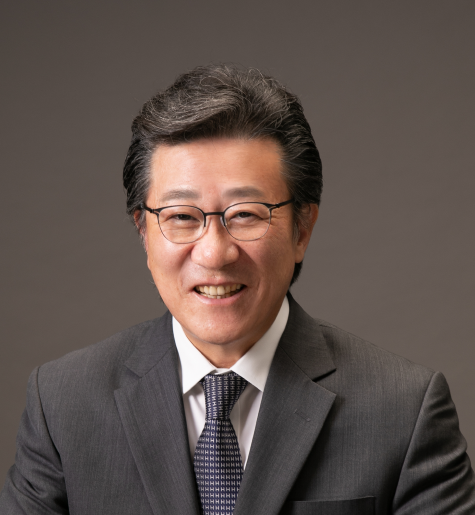
报 告 人:Dong-Il Dan Cho
韩国首尔大学,教授
报告题目:Physical Control Across Scales: Macro, Micro, Quantum, and Industrial Servos
内容简介:The principles of dynamic modeling, observer design, and feedback control hold at every physical scale. This lecture traces a multi-decade journey of pushing control to physical limits and carrying its lessons into industrial products.
It first revisits the macro, micro, and quantum scales: nonlinear control of fuel-injected automotive engines; the surface/bulk micromachining (SBM) process, which exploits the in-plane elastic isotropy of (111) silicon for high-performance MEMS gyroscopes; and microfabricated traps that confine single ions.
The main part presents the servo control technology in RS Automation’s CSD7 and D8 drives. It combines recursive discrete-time variable structure control (RDVSC) with a decoupled disturbance compensator (DDC), saturation compensation, and real-time resonance estimation for adaptive notch filters. The resulting smart-tuning controller sets its own gains and suppresses mechanical resonances without manual tuning. The lecture closes with lessons on moving control theory from papers into factory-floor products.
报告人简历:He received the B.S.M.E. degree from Carnegie Mellon University (1980), the M.S. degree from MIT (1984), and the Ph.D. degree also from MIT (1988). From 1987 to 1993, he was an assistant professor at Princeton University, and from 1993 to 2023, he was a professor at Seoul National University, where he also served as Director of the Biomimetic Robot Research Center from 2013 to 2023. He has been working as the Chief Scientific Officer at RS Automation Company since 2023.
He has authored or co-authored more than 600 international journal and conference papers, including more than 160 journal articles. He has also been active in technology transfer and holds or co-holds more than 150 U.S. and Korean patents. He founded or co-founded three startup companies and has served on the boards of directors of several companies listed on the Korean Stock Exchange.
He was a founding editorial board member of the IOP Journal of Micromechanics and Microengineering and of the IEEE Journal of Microelectromechanical Systems. He also served as Co-Editor-in-Chief of the IFAC journal Mechatronics. He served as President of ICROS, as a BOG member of IEEE CSS, and as an Administrative Committee member of IEEE EDS. He has been actively involved with IFAC since 2002 and served as the President from 2023 to 2026.
His major awards include the ICROS Award (2015) for outstanding contributions to control science and engineering, and the Doyeon Award (2021) for pioneering research in the semiconductor field. From the Korean government, he received the Commendation of the Minister of Information and Communication (2006), the Prime Minister's Commendation (2018), and the Government Service Merit Medal (2023). He was elected to the National Academy of Engineering of Korea as an Ordinary Member (2010–2012), as a Senior Member (2013–2023), and as an Emeritus Member (2023– ).
(三)
 报告时间:2026年11月12日10点30分
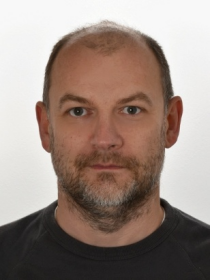
报 告 人:Wojciech Paszke
波兰绿山大学,教授
报告题目:A 2-D systems framework for data-driven and learning-enabled control of repetitive processes
内容简介:In recent years, data-driven control synthesis has emerged as a prominent research paradigm, largely driven by the widespread availability of affordable, high-capacity digital storage technologies. These technological advances have enabled the acquisition, storage, and utilization of extensive datasets, including measurement data obtained from experiments conducted on dynamical systems. In contrast to conventional model-based approaches, data-driven methodologies eliminate the need for explicit system identification and mathematical model development. Instead, controller synthesis is carried out directly from measured data, thereby circumventing the intermediate modeling stage.
This presentation examines the application of recent advances in data-driven control to the synthesis of iterative learning control (ILC) schemes for repetitive systems. Building upon established theoretical foundations, the proposed framework extends existing methodologies to more challenging control problems, particularly those in which the ILC system is formulated within a two-dimensional (2D) systems framework. The resulting design procedure provides formal guarantees of robust closed-loop stability in both the temporal and trial domains. Moreover, the controller synthesis problem is formulated as a convex optimization program, ensuring computational tractability and efficient implementation. The effectiveness of the proposed approach is demonstrated through a series of numerical case studies, which show that the resulting data-driven controllers achieve performance comparable to that obtained using well-established benchmark design methodologies.
报告人简历:Wojciech Paszke was born in Zielona Góra, Poland, in 1975. He received the M.Sc. and Ph.D. degrees in Electrical Engineering from the University of Zielona Góra, Poland, in 2000 and 2005, respectively. From 2008 to 2010, he conducted postdoctoral research at Eindhoven University of Technology, the Netherlands. In 2014, he was awarded the habilitation degree in Automatic Control by Wrocław University of Science and Technology, Poland. He is currently an Associate Professor with the Institute of Automation, Electronics and Electrical Engineering, University of Zielona Góra, Poland.
His research interests include multidimensional (nD) systems, repetitive processes, iterative learning control, and the application of convex optimization techniques to robust control problems. In particular, his work focuses on the development of advanced control methodologies based on two-dimensional (2D) and repetitive process frameworks for iterative learning control systems.
Prof. Paszke has authored and co-authored more than 120 scientific publications, primarily devoted to the analysis and control of multidimensional and repetitive systems. He has presented his research at numerous leading international conferences, including the IEEE Conference on Decision and Control (CDC), the American Control Conference (ACC), the European Control Conference (ECC), and the IFAC World Congress.
In addition, he maintains extensive research collaborations with numerous scientists and research groups across Europe and Asia, with a particular emphasis on long-term scientific cooperation with institutions in China. Through these collaborations, he has contributed to the advancement of international research initiatives in the fields of control theory and engineering.
Moreover, Prof. Paszke serves as an Associate Editor of Multidimensional Systems and Signal Processing and IET Control Theory & Applications, and is a member of the Editorial Board of the International Journal of Control.


 会议室预约系统
 旧版入口